From Private Draft to Community Remix: Publishing on Novus
How immutable publication, public preview derivatives, unlisted posts, attribution and remixing keep source projects private while ideas travel.
Novus Team9 min read
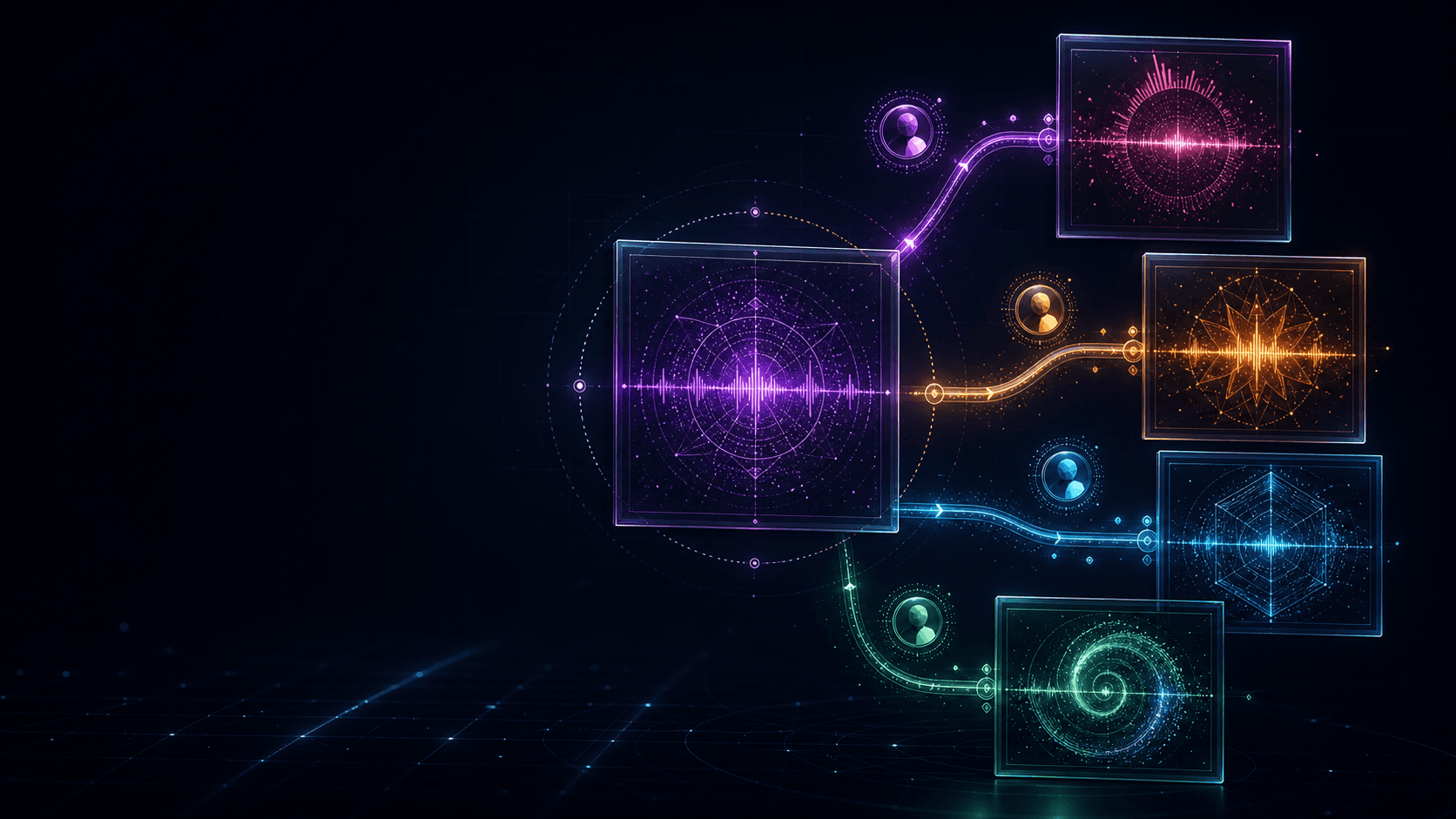
Saving and publishing are intentionally different actions in Novus. Saving protects work for you. Publishing chooses one version to show other people. Nothing in your creator library becomes public because you added a title, uploaded a logo or signed in; a project reaches the community only after you open the publish flow and confirm it.
That distinction makes the community useful without turning the editor into a social network that watches every draft. You can iterate privately for days, publish one strong version, keep changing the private project afterward, and know that the public post will not mutate underneath the people who saved or remixed it.
Private by default means private until you act
Projects, source audio, uploaded images, models, fonts and brand assets begin private. The community feed cannot browse your library, and another creator cannot open an editor from your private project ID. The Publish immutable revision action in the creator library is the boundary between those two worlds.
A profile is not publication
Creating a username, avatar or bio makes a creator identity; it does not expose your projects. Your profile shows community work only after you publish it.
What publication freezes
Publishing creates a new project revision whose kind is published, then points the community post at that exact revision. The frozen composition includes the layer order, engine modes, control values, graph, timeline, captions and referenced public-safe material needed to understand the work at that moment.
- The post title, description and up to eight useful tags describe the release in search and feeds.
- The selected project revision stays fixed even if the private working project reaches revision 40 later.
- A separate renderer capture becomes the public preview; the private source asset is not repurposed as a public file.
- The author, source post and remix relationship become durable attribution data rather than text someone can delete from a caption.
Why the preview is a separate file
A public post needs something fast and safe to show in a feed, but the project may contain a full-resolution master, private audio, a licensed font or a model you never intended to distribute. The publish form therefore asks for a real renderer still and stores it as a public preview derivative. Community cards load that derivative, not the private project assets behind it.
Choose a frame that represents the composition at its best: use a musically active moment, keep important geometry away from the crop edges, and confirm the logo or text is readable at card size. Framing Your Visual covers the same thumbnail and safe-zone checks in depth.
Public or unlisted
A public post can appear in the community feed and search. An unlisted post has a shareable page but stays out of the public feed, which is useful for feedback, a client approval link or a portfolio piece you do not want indexed alongside open community work. Both choices are publication: use unlisted for controlled reach, not as a substitute for private storage.
What people can do with a published post
- Like to send a lightweight signal to the creator and help useful work surface.
- Save to keep a reference in your own account without copying or editing the composition.
- Follow the creator so their future public work is easier to find.
- Comment with feedback that remains attached to the post rather than getting lost in a separate message thread.
- Remix when the creator has published a composition you want to build on; Novus creates a new private project copy for you.
- Report or block when content or interaction crosses the community guidelines.
A remix is a copy with a memory
Remixing reads the source's frozen revision, assigns the copy a new project ID and owner, and opens it as a private editable composition in the remixer's library. The new project starts from the published settings, but future edits belong to the remixer. The source post remains unchanged.
The important part is attribution: the remix records where it came from, and a remix published later keeps that relationship. Attribution is structural, not a courtesy line someone has to remember to paste. It gives viewers a path back to the original and gives the original creator credit as an idea spreads.
Prepare a project people can understand
- Name the idea, not the engine. Midnight Transit tells people more than Tunnel test 7.
- Write a short description of the visual rule. Mention the audio source, the motion idea and any central logo or lyric treatment.
- Use specific tags.
ambient,radial,logoandbassare useful;coolandvideoare not. - Capture an honest preview. Do not upload unrelated cover art or a frame the composition cannot actually produce.
- Test the frozen version. Save, reopen and export the project before publishing so the community is not your first regression test.
Publish the readable version
A community preview is small. Pull back excessive glow and motion echo, check the busiest beat, and choose a frame with a recognizable silhouette. The best editor preview is not always the best feed card.
Rights and private source material still matter
Publishing a visualizer does not grant rights to the music, images, models, lyrics, fonts or trademarks inside it. Use material you own, have licensed, or are allowed to share. A private audio master may remain private, but the public preview and description still need to respect the rights of everyone represented in them.
If you want a track that is safe for demonstrations, the Audio Library is the simplest starting point. For the difference between platform libraries, Content ID and music baked into an export, read Free Preview Music, Copyright and Your Uploads.
Reporting, blocking and moderation
Community tools include reporting for posts, comments and behavior, blocking controls, creator visibility choices and moderation records. Reports are reviewed against the Community Guidelines; privileged actions are audited. Blocking is for controlling your own experience, while reporting is for material the moderation team should evaluate for everyone.
Updating a public idea without rewriting history
Because a published revision is immutable, improving the private project does not silently replace what earlier viewers saw or what a remix used. Make the changes in your library, save them as a new revision, and publish a new post when the update deserves its own public moment. The old post remains an accurate record of the version people originally reacted to.
That model is the core of the Novus community: private work until you choose otherwise, stable references after you publish, and editable copies when inspiration becomes a remix. If you still need to make the project durable before sharing it, start with Save Once, Create Everywhere; when you are ready, open the community to see how other creators describe and present their work.
Reviewed by the editorial team. Report a correction.
Keep reading
Was this page helpful?
Anonymous. Only this page’s address and your yes/no are recorded, and only if you allowed analytics cookies.
Ready to make your own?
Open the editor, drop in a track, and export a watermark-free video — free, no account.
Open the Editor